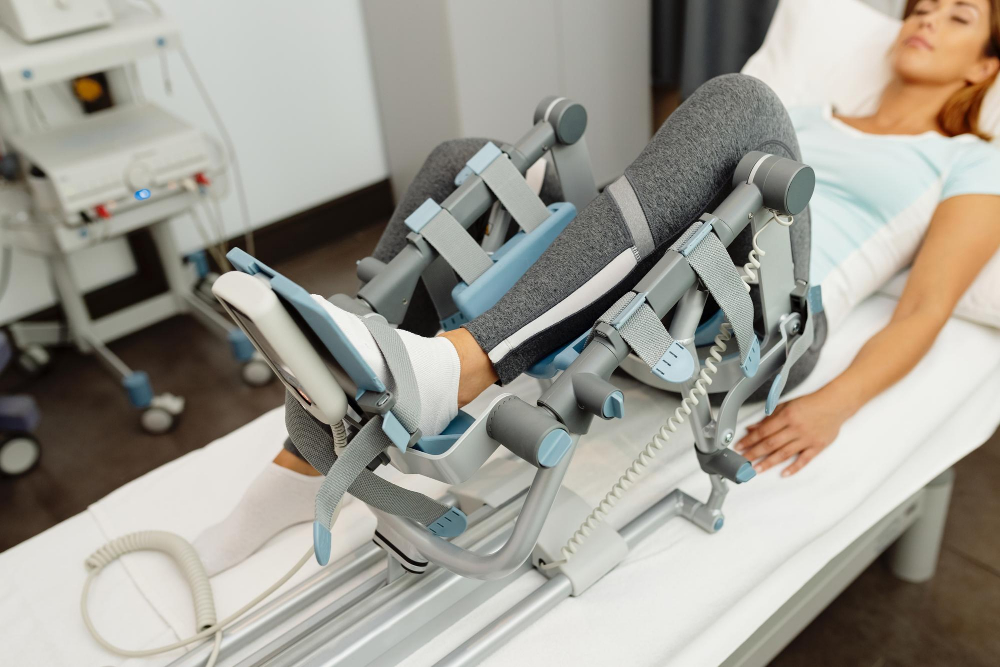

The anterior approach (DAA) reaches the hip from the front without cutting muscles, offering faster early recovery and lower dislocation risk. The posterior approach (PA) accesses the hip from the back and gives the surgeon excellent visibility, making it better suited for complex cases. Both deliver equally strong long-term outcomes. The right choice depends on your body type, bone anatomy, activity goals, and your surgeon’s experience.
You have already decided to pursue hip replacement surgery. You have researched the cost, shortlisted hospitals, and maybe even spoken with a surgeon. But one question keeps surfacing in your mind — does it matter how the surgeon gets to the joint?
The short answer: yes, significantly.
The surgical approach your surgeon uses determines how much muscle the procedure disturbs, how quickly you walk again, what restrictions you follow post-surgery, and how low your risk of complications sits. Two approaches dominate hip replacement surgery worldwide — the Direct Anterior Approach (DAA) and the Posterior Approach (PA). Both replace the same damaged joint. Both use the same high-quality implants. But the path each surgeon takes to reach that joint creates real, measurable differences in how patients recover.
This guide breaks down everything you need to know — with evidence from 2025 clinical research — so you walk into your consultation fully informed.
The direct anterior approach (DAA), also called the Smith-Petersen approach, enters the hip joint from the front of the thigh. The surgeon makes a small incision at the front of the hip and navigates through a natural gap between two muscle groups — the tensor fascia lata and the sartorius — without cutting or detaching any major muscle.
Because the muscles move aside rather than get cut through, the body sustains significantly less trauma during surgery.
Because the body’s muscles experience minimal disruption, patients often stand and walk with support within 24 hours of surgery.
The posterior approach (PA), also known as the posterolateral approach, has served as the global standard for hip replacement for decades. Surgeons use this technique in roughly 70% of total hip arthroplasties performed worldwide.
The surgeon accesses the hip joint from the back of the hip, which requires detaching several short external rotator muscles — including the piriformis, the gemellus muscles, and part of the quadratus femoris — to expose the joint.
The detachment and reattachment of muscles adds tissue healing time to the recovery process, which is why posterior approach patients typically need longer before they regain full strength.
Factor | Anterior Approach (DAA) | Posterior Approach (PA) |
Incision location | Front of the hip | Back/side of the hip |
Muscle impact | Muscle-sparing (no cutting) | Muscles detached and reattached |
Hospital stay | Shorter (0.88 days less on average) | Standard (4–5 days) |
Early pain levels | Lower on Day 1 | Moderate to higher |
Dislocation risk | Lower (0.84% vs 1.82% in large meta-analyses) | Slightly higher without strict precautions |
Hip precautions | Minimal to none | Required for 6–8 weeks |
Long-term outcomes | Equivalent | Equivalent |
Operative time | Slightly longer (10–14 min extra) | Shorter |
Nerve injury risk | Lateral femoral cutaneous nerve (~30% incidence, usually temporary) | Sciatic nerve (rare) |
Best suited for | Active patients, younger patients, those seeking faster return to life | Complex anatomy, obese patients, revision surgeries, high-volume routine cases |
Surgeon learning curve | Steep (100+ cases to master) | Lower — widely taught globally |
Surgeons and patients debate this topic passionately. Here is what the most current peer-reviewed evidence actually shows:
A major 2025 meta-analysis published in Frontiers in Surgery reviewed 48 studies covering 46,367 hip replacement procedures. The researchers found that direct anterior approach patients experienced:
A separate 2025 meta-analysis from PMC (covering randomized clinical trials up to June 2025) confirmed that DAA patients reported lower pain scores on Day 1 post-surgery and demonstrated superior early functional outcomes at the one-month mark.
The same research consistently shows that long-term outcomes equalize between both approaches. By the 3-month and 12-month marks, Harris Hip Scores, functional tests, and quality-of-life measures show no statistically significant difference between anterior and posterior patients.
The posterior approach also carries a lower risk of wound complications in obese patients and avoids the specific nerve injury risk (lateral femoral cutaneous nerve damage) that the anterior approach carries. In complex cases — severe arthritis, significant bone deformity, revision surgery — surgeons who use the posterior approach gain superior visualization that directly improves implant placement accuracy.
Multiple studies reinforce a critical point: the anterior approach requires a steep learning curve. Research shows complication rates only normalize after a surgeon completes more than 100 DAA procedures. A highly experienced posterior approach surgeon consistently delivers better outcomes than an inexperienced anterior approach surgeon — regardless of which technique theoretically performs better on paper.
where the new ball pops out of the socket — ranks as the most feared complication of hip replacement surgery. It remains the leading reason for revision surgery after the procedure.
Patients frequently ask: “Will I dislocate my hip more easily with one approach over the other?“
The research gives a nuanced answer. Multiple studies show the anterior approach produces statistically lower dislocation rates. The 2025 Frontiers in Surgery meta-analysis recorded dislocation rates of 0.84% (DAA) vs 1.82% (PA) — a statistically significant difference. The biological reason makes sense: because DAA leaves the posterior capsule intact, the joint maintains its natural posterior stability.
However, several large registry studies show no significant difference in dislocation rates when posterior approach surgeons use modern soft-tissue repair techniques and the patient follows hip precautions strictly.
The practical takeaway: an anterior approach surgeon with 200+ cases under their belt significantly reduces your dislocation risk compared to most alternatives. But a skilled posterior approach surgeon using current capsular repair techniques achieves nearly equivalent safety outcomes.
This distinction often surprises patients — and it significantly affects daily life after surgery.
Violating these restrictions risks dislocation in the weeks immediately after surgery, before the soft tissues heal enough to stabilize the joint.
Because the posterior capsule remains intact during the anterior approach, most patients require no formal hip precautions or significantly reduced ones. Patients can sit in normal chairs, sleep in their preferred position, and move more naturally from the first week after surgery.
For international patients traveling to India for hip replacement surgery, this distinction carries real practical weight. Flying home after surgery, sitting in hotel rooms during recovery, and managing daily tasks without a caregiver become considerably more manageable after an anterior approach.
The anterior approach suits a specific patient profile well:
The posterior approach remains the most practiced hip replacement technique globally — and for good reason. It provides exceptional surgical visibility and surgeons worldwide master it during their training.
Robotic hip replacement — using systems like the Stryker MAKO or NAVIO — adds a layer of precision to implant placement that significantly reduces the margin for human error. In India, several leading hospitals already offer robotic-assisted total hip arthroplasty.
When a surgeon uses robotic assistance, the system generates a patient-specific 3D bone model, plans the optimal implant position, and provides real-time guidance during surgery. This technology improves acetabular cup placement accuracy to within 0.1mm — reducing the risk of leg length discrepancy and implant malposition.
Understanding the recovery difference helps patients plan their post-surgery life — particularly international patients who need to manage hotel stays, flights, and returning to work.
Timeframe | Expected Milestones |
Day 0 (surgery day) | Surgery completed; pain medication administered; patient moves to recovery |
Day 1 | Patient sits up, stands, and takes first steps with a walker |
Day 2–3 | Patient practices walking, stair climbing, and light exercises; switches from IV to oral pain medication |
Day 4–5 | Hospital discharge; patient walks with a cane or single crutch |
Week 1–2 | Daily physiotherapy; increasing walking distance; stitches removed |
Week 2–3 | Most patients fit to fly internationally |
Week 6 | Most patients drive and return to desk work |
Month 3 | Low-impact activity (swimming, golf, walking) fully resumed |
Year 1+ | New hip fully integrated; implant expected to last 20–25 years |
Timeframe | Expected Milestones |
Day 0 | Surgery completed; pain managed; patient moves to recovery |
Day 1 | Physiotherapy begins; patient stands with support |
Day 2–4 | Patient walks with walker; hip precautions begin immediately |
Day 5–7 | Hospital discharge with walker and precaution guidelines |
Week 1–3 | Daily physiotherapy; strict precautions enforced; limited daily activity |
Week 3–4 | Most international patients fit to fly (with precaution compliance) |
Week 6–8 | Hip precautions lifted; patient transitions to cane |
Month 3 | Activity level increases substantially |
Year 1+ | Outcomes equivalent to anterior approach patients |
Both approaches carry nerve injury risks — just different nerves.
The lateral femoral cutaneous nerve runs close to the anterior incision site. DAA surgery carries an LFCN injury incidence of approximately 30%, according to a 2025 study published in Frontiers in Surgery. This nerve controls sensation on the outer thigh. When the surgeon disturbs it during retraction, patients experience thigh numbness or tingling.
The important context: the vast majority of LFCN injuries resolve on their own within weeks to months as the nerve recovers. Permanent significant LFCN injury is uncommon. Experienced anterior approach surgeons develop specific retraction techniques that reduce this risk considerably.
The posterior approach places the sciatic nerve — the body’s largest nerve — in relative proximity to the surgical field. Sciatic nerve injury during posterior hip replacement is rare but more serious when it occurs, sometimes causing weakness or numbness in the leg and foot. Modern posterior approach techniques significantly reduce this risk through careful patient positioning and surgical technique.
India’s leading hip replacement surgeons at JCI-accredited hospitals — including those at Fortis, Apollo, Artemis, and BLK Max — perform both approaches. Their decision-making process follows a structured patient assessment:
They discuss trade-offs honestly. The best surgeons in India acknowledge that no universal “best approach” exists — only the best approach for your specific case.
Use this checklist during your pre-operative consultation or video call with your surgeon:
India’s top orthopaedic hospitals offer both anterior and posterior hip replacement techniques, performed by fellowship-trained surgeons who studied in the UK, USA, or Germany. The combination of high surgical volume (some surgeons perform 500+ joint replacements annually), advanced robotic systems, JCI and NABH accreditation, and comprehensive international patient coordination makes India a uniquely competitive destination.
Key advantages India offers over Western countries for both approaches:
Choose the anterior approach if:
Choose the posterior approach if:
In both cases: Verify that your surgeon performs high volumes of their recommended technique. Surgeon experience predicts outcomes more reliably than approach preference alone.
Both the anterior and posterior approaches deliver life-changing results. Millions of patients worldwide walk pain-free today because of both techniques. The science shows that anterior approach surgery offers real short-term advantages — less muscle damage, faster early recovery, lower dislocation rates, and freedom from hip precautions. The posterior approach delivers decades of proven reliability, exceptional surgical visibility for complex cases, and outcomes that fully match the anterior approach over the long term.
The single most important factor in your outcome is not which technique your surgeon uses. It is how well your surgeon performs it.
A high-volume anterior approach specialist in India who has performed 400+ DAA procedures delivers outcomes that consistently outperform any inexperienced surgeon using any technique. Choosing a surgeon with a proven track record, JCI-accredited facilities, and experience treating international patients gives you the strongest foundation for a successful recovery — regardless of which path they take to reach your hip.
No. The anterior approach offers faster early recovery and lower dislocation risk in the right patient, but it requires a surgeon who has completed a steep learning curve. Long-term outcomes show no significant difference between anterior and posterior approaches.
Research from 2025 confirms that anterior approach patients report lower pain scores on post-operative Day 1, and functional scores at the one-month mark favor anterior approach patients. By three months, pain and function levels equalize between both groups.
Patients with a high BMI face elevated wound complication risks through the anterior approach due to tissue depth. Most surgeons recommend the posterior approach for patients with BMI above 35–40. Your surgeon will assess your specific anatomy and BMI during the pre-operative evaluation.
Ask directly: how many anterior approach hip replacements do you perform per year? Research shows complication rates normalize after surgeons surpass 100 DAA cases. Surgeons performing 200+ annually represent the highest-volume tier.
Yes. Posterior approach patients typically use a walker for 4-6 weeks vs 2-3 weeks for anterior approach patients. Hip precautions also restrict movement for 6-8 weeks post-surgery.
India’s high-volume JCI-accredited hospitals report dislocation rates that align with international standards — typically 0.5%–2% depending on approach and implant type. Anterior approach patients at experienced centres achieve rates at the lower end of this range.
Most anterior approach patients have minimal or no sleeping restrictions after surgery. Posterior approach patients typically avoid sleeping on their operated side and use a pillow between their knees for 6–8 weeks.
Most anterior approach patients receive medical clearance to fly within 14–21 days of surgery. Posterior approach patients typically require 21–28 days before long-haul flight is safe. Your surgical team will confirm clearance based on your individual recovery progress.


MediOasis provides independent medical guidance and care coordination for international patients seeking treatment in India.

26, Manewada Rd, Nagpur, Maharashtra – 440027, India
+91 97302 99228
info@medioasis.in
All Rights Reserved by MEDIOASIS | The Heart of Your Healthcare